Types of Burns and How to Treat Them
Burns happen more often than you might think
A hot frying pan, boiling water from a kettle, a hot iron, the sun at the beach, or carelessness with household chemicals—you can get a burn in a matter of seconds, but it takes days or weeks to heal. How deeply the skin is damaged and whether a scar remains depends on how properly first aid is administered in the first few minutes.
This article explains—in simple terms—all types and degrees of burns, step-by-step first aid, common mistakes that only make things worse, home treatment, and how the modern hydrogel bandage, Hydrobint, is becoming the No. 1 first-aid solution for burns—without alcohol, pain, or unnecessary items in your first-aid kit.
Types of Burns by Cause
Before treating a burn, it is important to understand what caused it—first aid depends on this.
Type of burn | Reason | Features |
Thermal | Hot liquids, steam, flames, and hot objects | The most common type; clothing can stick to the skin and worsen the injury |
Chemical | Acids, alkalis, household chemicals, heavy metal salts | Alkalis penetrate deeper and are more dangerous than acids, which form a protective scab |
Electric | Contact with an exposed wire, lightning strike | A small area of the skin is affected, but the tissue damage is deep; this can cause cardiac arrest |
Solar / radiant | Prolonged exposure to ultraviolet light, radiation | It usually affects only the upper layers of the skin, but over large areas of the body |
Each type requires its own first-aid approach—more on that below.
Degrees of Burns: How to Determine the Severity of an Injury
Doctors classify burns into four degrees based on the depth of skin damage.
Degree | What is affected | Signs | Healing |
I | Only the outermost layer of the skin (the epidermis) | Redness, slight swelling, no blisters | 2–3 days |
II | Dermis (the deeper layer of the skin) | Blisters filled with clear fluid, severe pain, and moist, red skin | 10–15 days |
III | All layers of the skin, and sometimes the subcutaneous tissue | Dry, white, or black skin; the wound is almost painless (the nerves are damaged) | Requires medical attention; often requires a skin graft |
IV | Skin, muscles, tendons, bones | Charred tissue, critical condition | Emergency hospitalization |

To estimate the area of a burn, use the “palm rule”: a person’s palm, including the fingers, is approximately 1% of their body surface area. First-degree burns covering up to 3 palms can usually be treated at home. Second-degree burns and deeper burns, as well as burns covering more than 5 palms, are a reason to see a doctor.
First Aid for Burns: A Step-by-Step Guide
- Remove the person from the source of heat, chemicals, or electric current. In the event of an electric shock, first turn off the power, and do not touch the victim with your hands.
- Remove clothing and jewelry from the area around the burn, unless they are stuck to the skin.
- Cool the burn with cool running water (not ice-cold!) for 15–20 minutes. Do not apply ice—it can worsen tissue damage.
- Do not pop the blisters—they protect the wound from infection.
- If you are experiencing severe pain, take a pain reliever (acetaminophen or ibuprofen).
- Cover the burn with a sterile, non-adhesive bandage or a clean cloth.
- In case of a chemical burn, rinse the affected area with plenty of water for at least 20 minutes; if possible, keep the chemical’s packaging for the doctor.
- Seek immediate medical attention for third- and fourth-degree burns, burns to the face, respiratory tract, genitals, or joints, burns in children and the elderly, and burns covering an area larger than 5 palms.
What Not to Do When You Have a Burn: Common Myths
- Do not apply oil, butter, sour cream, or kefir to a burn—fat traps heat within the tissues and worsens the damage.
- Applying ice or frozen foods directly to the skin can cause frostbite.
- Applying toothpaste, baking soda, or alcohol to an open wound irritates the tissue and increases the risk of infection.
- Do not pop blisters yourself—an open wound without a protective layer can easily become infected.
- Do not use cotton wool for dressings—its fibers stick to the wound.
- Pulling off clothing that is stuck to a burn will make the injury worse; instead, cut the clothing away around the affected area.
Treating Burns at Home
It is safe to treat first-degree burns and shallow second-degree burns covering an area of up to a few palms at home—provided they do not affect the face, hands, joints, genitals, or airways.
What to do:
- After cooling and cleaning the wound, apply a dressing that maintains a moist environment—this speeds up healing and reduces pain.
- Change the dressing according to the product instructions, while monitoring the condition of the wound.
- Watch for signs of infection: increased redness, swelling, pus, an unpleasant odor, and a fever.
- Protect the area from the sun and friction from clothing until it has completely healed.
When home treatment isn’t enough and you need to see a doctor:
- the burn has not healed in more than 2 weeks;
- signs of infection have appeared;
- a deep burn (third- or fourth-degree) or a burn covering a large area;
- a child, a pregnant woman, or an elderly person was injured;
- a chemical or electrical burn, or a burn affecting the face, joints, or respiratory tract.
A Hydrobint as First Aid for Burns
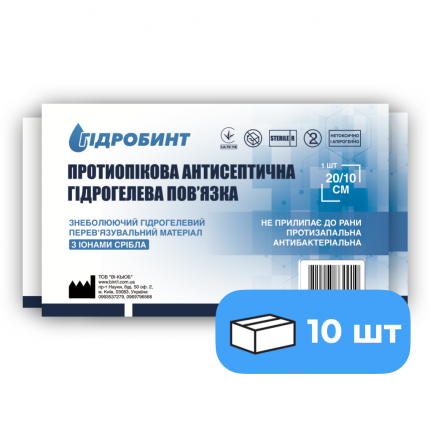
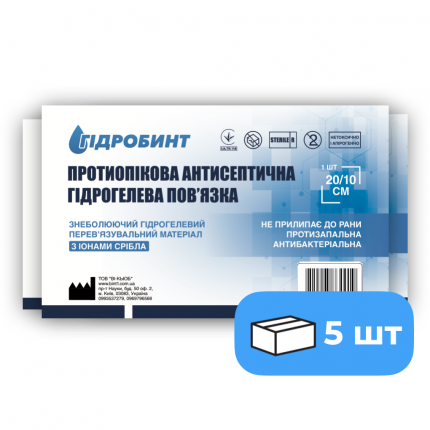
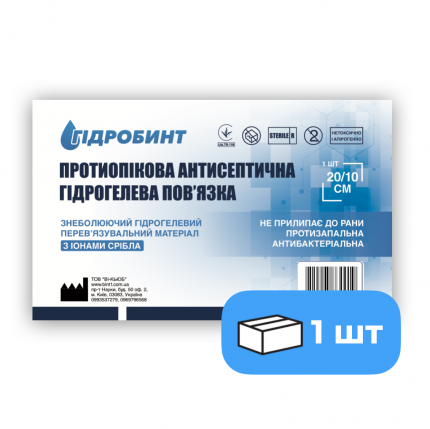
When you don’t have cold water or a first-aid kit with a dozen different items on hand, the HydroBint hydrogel bandage is the first—and, in fact, the only—thing you need to do.
The hydrobandage consists of 80–90% water bound into a hydrogel through radiation cross-linking—without the use of chemical cross-linking agents. Thanks to water’s high heat capacity, the dressing immediately cools the wound and stops further tissue damage, providing pain relief from the moment it is applied.
Silver nanoparticles have been added to the hydrogel; these destroy microbial membranes and halt microbial growth in the wound—which is why the dressing does not require alcohol or other antiseptics, which further irritate skin that is already damaged. The material does not stick to the wound, can be removed painlessly, and, thanks to its transparency, allows you to monitor the condition of the burn without removing the dressing. The hydrogel’s pores allow oxygen and moisture to pass through but trap bacteria—the wound “breathes” and heals in an optimal moist environment. One dressing remains effective for up to 20–25 hours.
| Traditional First Aid | Gidrobint |
Pain Relief | A separate pain reliever is needed | Cools and relieves pain immediately upon application |
Antiseptics | Often, alcohol or iodine, which cause a burning sensation | Silver nanoparticles—alcohol-free and non-irritating |
Sticking to the wound | The gauze sticks to the skin, and changing it is painful | Doesn’t stick; comes off painlessly |
Wound Care | I need to take off the bandage | Transparent — the wound is visible without removing it |
A hydrocolloid dressing is indicated for first- and second-degree burns, as well as for open wounds, pressure sores, trophic ulcers, and post-surgical care—so having just one dressing in your first-aid kit covers most common skin injuries.
Proper first aid in the first few minutes after a burn affects how severe the injury will be and how quickly the wound will heal. Cooling the burn with water, avoiding “old-fashioned” remedies like oil or toothpaste, and using a modern moisture-retaining bandage—these are three things everyone should remember. Keep Hydrobint in your first-aid kit at home, in the car, and in the kitchen: it’s one of those rare products that works both as first aid and as a complete treatment for first- and second-degree burns until full healing is achieved.